Mindfulness helps children and adolescents manage stress and difficult emotions
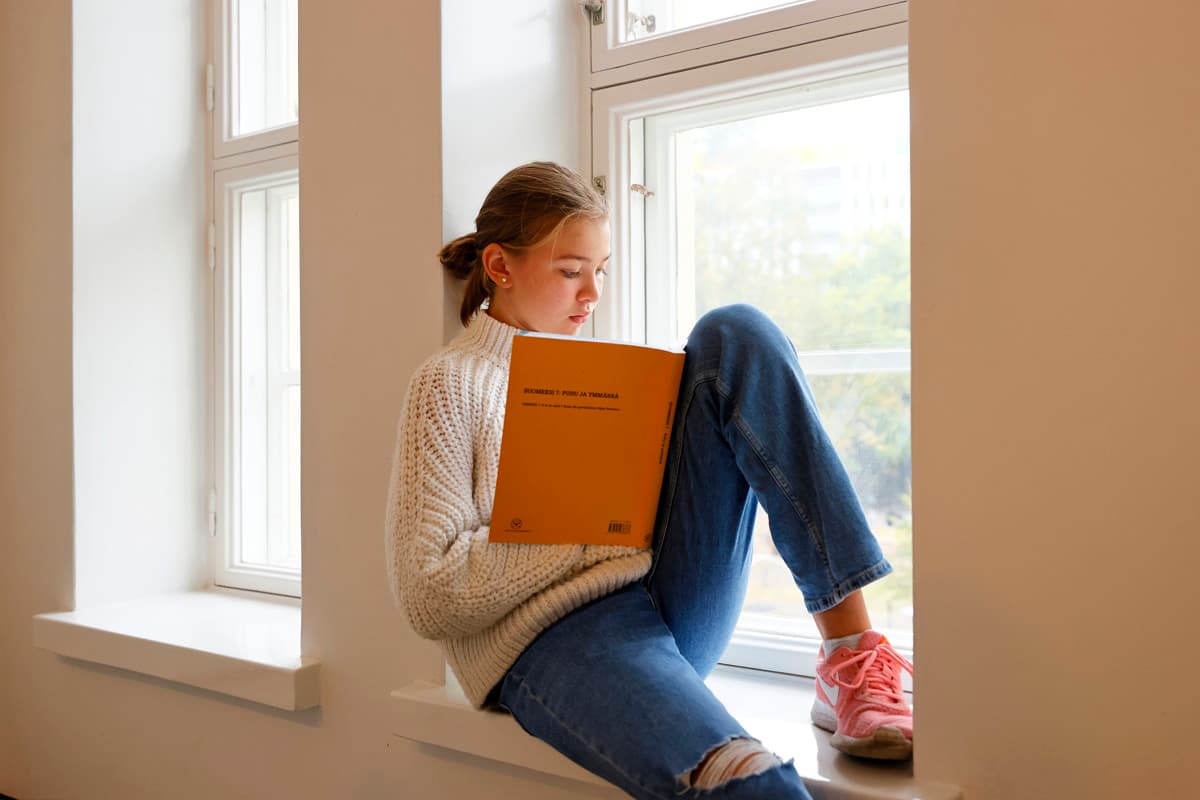
Research at the Folkhälsan Research Center shows that mindfulness practices in school can improve young people’s stress management, emotional regulation, and wellbeing. Researcher Salla-Maarit Volanen explains that the starting point is for young people to learn to pause and notice what is happening in their bodies.
Many young people today place very high demands on themselves and live in a constant stream of information and distractions. Salla-Maarit Volanen, a senior researcher at the Folkhälsan Research Center, sees mindfulness as a concrete way to strengthen young people’s ability to manage stress, regulate emotions, and cope with the pressures of everyday life.
Mindfulness is not, however, a quick fix that makes problems disappear. On the other hand, regular practice can give young people the tools to tackle setbacks and difficult emotions that are a natural part of life.
“Mindfulness is a skill that we can practice. It means being present in the moment and accepting what is happening right now,” Volanen says. “This creates a sense of security and trust in life.”
Volanen leads the Healthy Learning Mind research project, which explores how mindfulness affects students’ wellbeing. In the study, students who practiced mindfulness at school showed, among other things, better stress management, greater resilience, more prosocial behavior, and a higher quality of life. The girls also showed fewer symptoms of depression.
International studies also show that mindfulness can have positive effects on self-regulation, cognitive and socio-emotional skills, as well as emotions such as gratitude, joy, compassion, and hope.

How can mindfulness exercises specifically influence young people’s ability to manage stress and regulate their emotions?
“Mindfulness activates the parasympathetic nervous system, which promotes rest and recovery,” Volanen says. “Stress is a type of threat response, while mindfulness creates a sense of security.”
A first step in managing stress is becoming aware of what happens in the body when we become stressed. Mindfulness exercises can help us pause and notice the body’s signals.
There are many different types of mindfulness exercises. One exercise involves focusing on what happens in the body as we breathe.
“When we pause and notice how we are feeling, the body can begin to calm down,” Volanen says. “This gives us a better opportunity to think clearly about what we need to do. When we practice regularly, we learn to recognize stress and difficult emotions in the body more quickly. We can then practice facing those emotions instead of reacting to them immediately.”
Mindfulness exercises also train attention and concentration. Instead of allowing our thoughts to run on autopilot, we consciously direct our attention toward something we choose ourselves—for example, our breathing, our body, our thoughts, or our feelings.
“When we practice mindfulness, we practice keeping our attention on whatever we have chosen to focus on. Our minds will still wander, and that is completely normal. When we notice this, we gently bring our attention back to our chosen focus without criticizing ourselves. In this way, we train our ability to regulate our attention – that is, our ability to concentrate.”
Practicing mindfulness is not an end in itself. The exercises are a way of strengthening skills that we need in everyday life.
“I often compare it to working out at the gym. Most of us do not go to the gym simply for the joy of lifting weights. We go because we want a strong, healthy body that can handle the demands of everyday life. Exactly the same applies to mindfulness exercises. We practice so that we can have a balanced, stable, resilient, and flexible mind in our daily lives. Regular mindfulness practice strengthens our brains in the same way that exercise strengthens our muscles,” Volanen says.

All emotions are okay
An important part of mindfulness is learning to understand and regulate emotions.
“Today, there is a great deal of discussion about emotions with young people, and many young people are good at paying attention to their emotions,” Volanen says. “But they do not always know how to regulate them.”
It is important for young people to learn that difficult emotions such as hatred, jealousy, anger, and fear are also part of life.
“Sometimes we feel sad, angry, or afraid, and that is completely okay. Research has shown that when young people feel that their emotions are wrong or should be condemned, their risk of depression increases. Emotions come and go, and we need to learn to respond to them in ways that support our wellbeing.”
Mindfulness is therefore not about stopping our thoughts or emotions. It is about becoming aware of what is happening within us and creating more space to choose how to act.
”When young people realize that they can influence how they feel – for example, by managing their stress levels and calming themselves down – their confidence in their own abilities also grows. This confidence is important for their outlook on the future. When they feel that they can influence their own future, it becomes easier to recognize opportunities, stay committed to their studies, and make sound choices in life.”
Bringing research into the classroom
The Healthy Learning Mind research project was launched at the Folkhälsan Research Center more than ten years ago. Alongside her research, Salla-Maarit Volanen founded a nonprofit association that trains teachers and helps bring the research findings into everyday school life.
“We have trained nearly 1,000 teachers in mindfulness over the years.”
The implementation of the research findings has attracted considerable interest at various levels of society.
“Last year, I was invited to the Finnish Parliament as an invited expert to talk about our research project and the benefits of mindfulness in the school environment. As a result, council initiatives were introduced calling for the methods that proved effective in our project to be implemented in all elementary schools in Helsinki and Turku. This fall, we’ll see what that means in practice.”
What does practicing mindfulness at school look like in practice?
“It all starts with training the teachers to improve their own stress management and wellbeing at work,” says Volanen.
The first module of the teacher training program involves teachers practicing mindfulness with a focus on themselves, so they can deepen their own body awareness and presence and experience the benefits of the practices firsthand.
“We’ve been very grateful to see that all the teachers who have completed our training have benefited greatly from it. Perhaps the most interesting and meaningful aspect is that the teachers’ own training also directly benefits their students. Our emotional state and mood affect the people around us,” Volanen says.
“To teach something to someone else, you need to know it yourself. Anyone who is going to teach mindfulness needs to have their own experience with the exercises and with working on body awareness, stress management, and emotional regulation. This helps teachers respond more calmly in the classroom, fostering a sense of safety that supports learning.”
It is not until the second module of the training that teachers begin to focus on their students. They are then asked to develop an inspiring way to practice mindfulness with their students.
“One teacher created a board game with activities that introduce students to mindfulness. Others have introduced a silent moment during morning assembly or before a test. One teacher created a gratitude wall where students can post notes about things they are grateful for. Trips to a nearby forest, focusing on the surrounding using all five senses, have also been popular.”
People sometimes assume that mindfulness is simply about sitting still and breathing. Especially for young people in a school setting, however, it is about much more than that. At its best, mindfulness helps students understand themselves better, regulate their emotions, increase the sense of safety in the classroom, and learn about mental wellbeing.
Healthy Learning Mind
The Healthy Learning Mind is a randomized controlled study conducted at the Folkhälsan Research Center. A total of 3,519 students, along with their teachers and parents, participated in the study, which was carried out from 2014 to 2016. The purpose of the study is to examine the effects of mindfulness on wellbeing, resilience, self-compassion, and happiness among students ages 12–15 in a school setting.
“Our Finnish study is one of the two largest studies in the world on mindfulness in school settings. An independent evaluation found that our study is one of the strongest methodologically designed mindfulness studies internationally, meaning that the reliability of the findings is considered high. Among other things, our findings show that mindfulness exercises strengthen young people’s stress management, prosocial behavior, health-related quality of life, and life satisfaction. Symptoms of depression also decreased among the girls,” says senior researcher Salla-Maarit Volanen, who leads the study.
Läs artikeln på svenska här

Heidi Furu
Science communicator
Administration
+358 44 488 3086
Contact us

Salla-Maarit Volanen
Senior Scientist, Project Leader
Public Health Research Program
+358 50 542 1085