Rare diseases provide the key to understanding how our muscles work
You might think rare diseases aren’t relevant to researchers because they affect so few people. But that rarity is exactly what makes them so interesting.
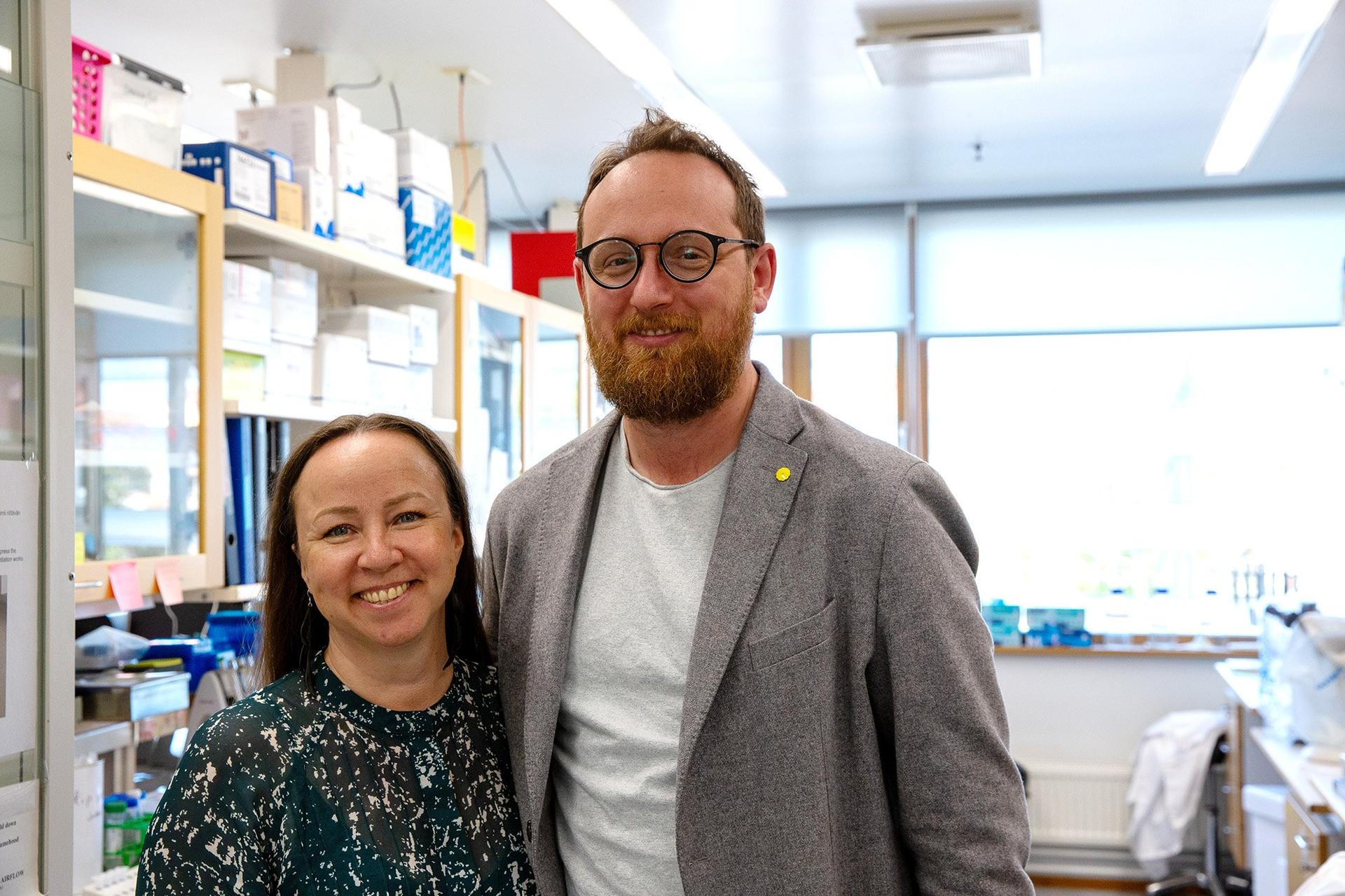
– For us researchers, rare diseases are the exception that teaches us to understand the rule. Rare diseases are crucial when we want to find out how a muscle cell, a tissue, or a particular mechanism works, says Marco Savarese, Group Leader for the Myofin group, which conducts research in rare inherited muscle diseases.
When researchers discover what isn’t working properly in someone with a rare muscle disease, it also deepens our understanding of how muscles work when everything is functioning as it should.
Three research groups became one
The Myofin research group was founded at the Folkhälsan Research Center in January 2025, when three previous research groups merged. One of the groups, led by Carina Wallgren-Pettersson, studied nemaline myopathies, which are a group of hereditary muscle diseases that most often begin in childhood. Bjarne Udds' group focused on titinopathies and other neuromuscular diseases typically identified in adulthood. The third group, led by Savarese, focused on genetic aspects of rare muscle diseases.
In the past, the groups’ work mainly centered on finding the genes that can cause a disease.
– We have identified, or helped to identify, 12 genes that cause nemaline myopathy, and we are still discovering new ones. But now the research is also about finding out what the different gene mutations actually do, says Jenni Laitila, Young Group Leader in Myofin.
Savarese’s research aims to find mutations in genes, while Laitila’s work investigates what these mutations lead to in the muscles.
– In this field of research, you can't achieve anything alone. We now have a broad range of expertise in the group, which bodes well for the future, says Savarese.
Several of the rare muscle diseases are similar, and if a treatment is found that works for one disease, it may be possible to use the same treatment for other diseases.
For both researchers and patients, a cure is of course the ultimate goal.
– But the people who live with the diseases we are researching fully understand that it is unlikely to find a complete cure for their disease. We can't perform magic tricks and fix all the various causative genes. But we may find an effective treatment, for instance a way to give the muscles access to more energy, which will make the muscles work a little better, says Laitila.
Internationally renowned
Folkhälsan's research on rare muscle diseases has a very good international reputation.
– Everyone who researches rare muscle diseases knows Folkhälsan, and it has been that way for 20 years, says Jenni Laitila.
Since the people affected by the muscle diseases that Myofin researches are scattered all over the world, it is extremely important for the researchers that their work is well known abroad.
– Our international reputation is crucial for us. That is why patients are referred to our research projects, which allows us to collect data from all over the world, says Marco Savarese.
– Ultimately, the entire community benefits from the research we do. In this context, science has no boundaries, says Savarese.
Heidi Furu
Science communicator
Administration
+358 44 488 3086